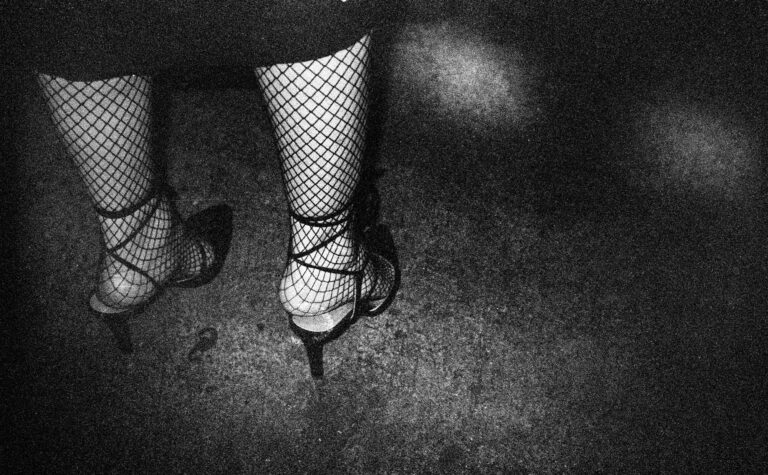
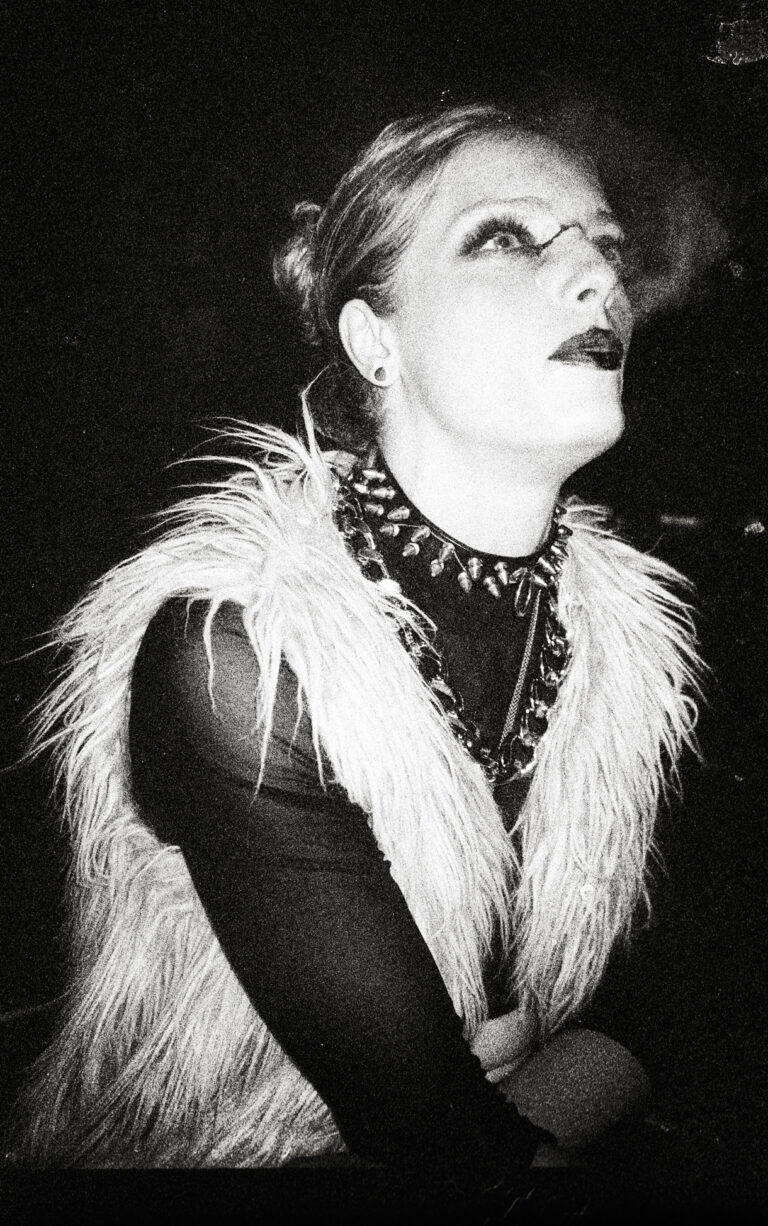
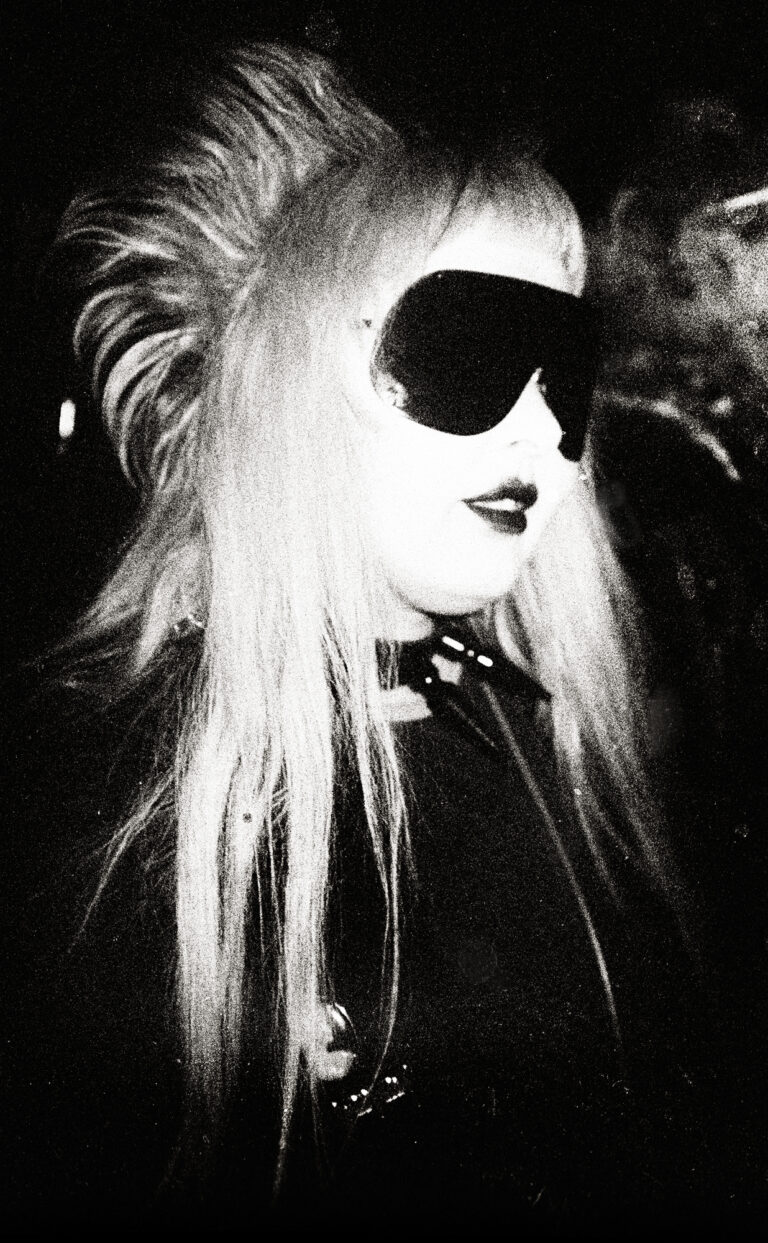
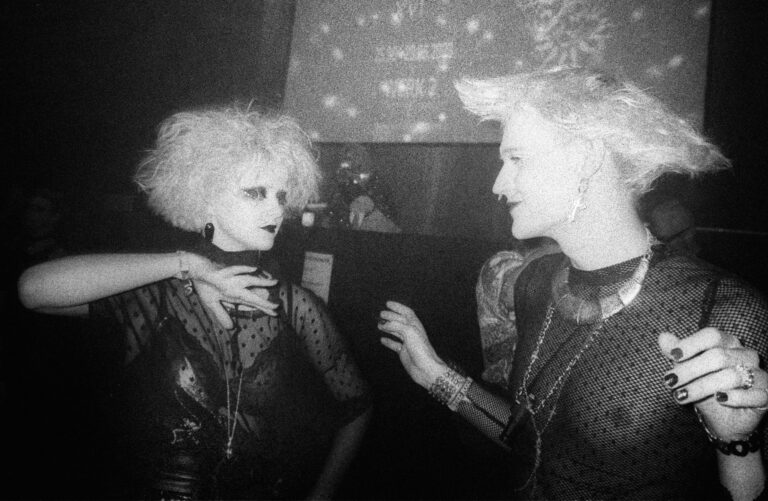
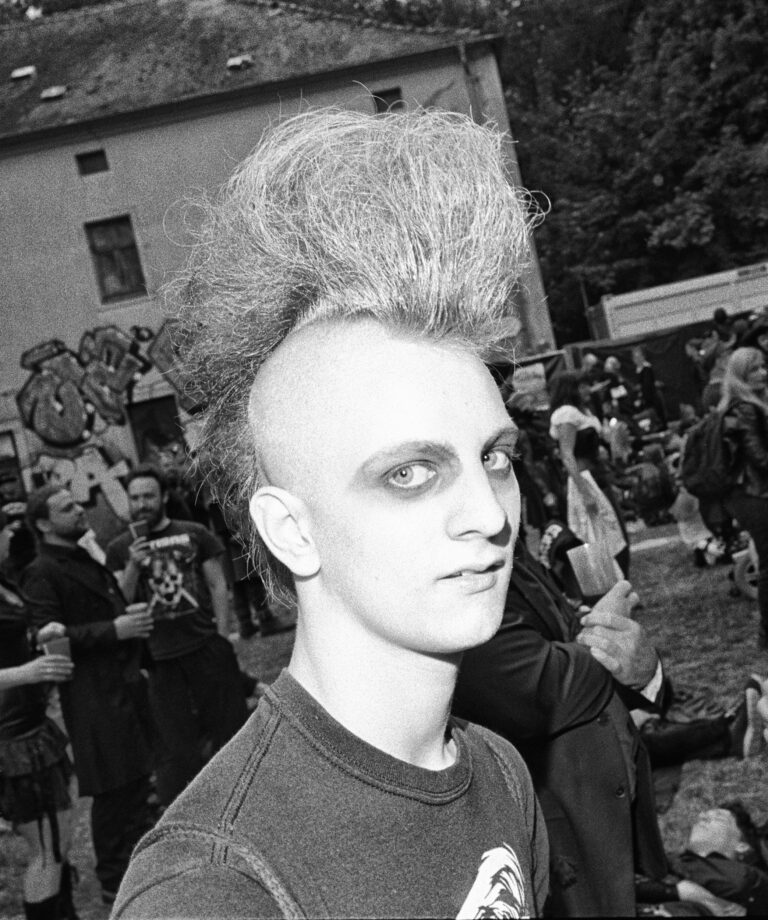
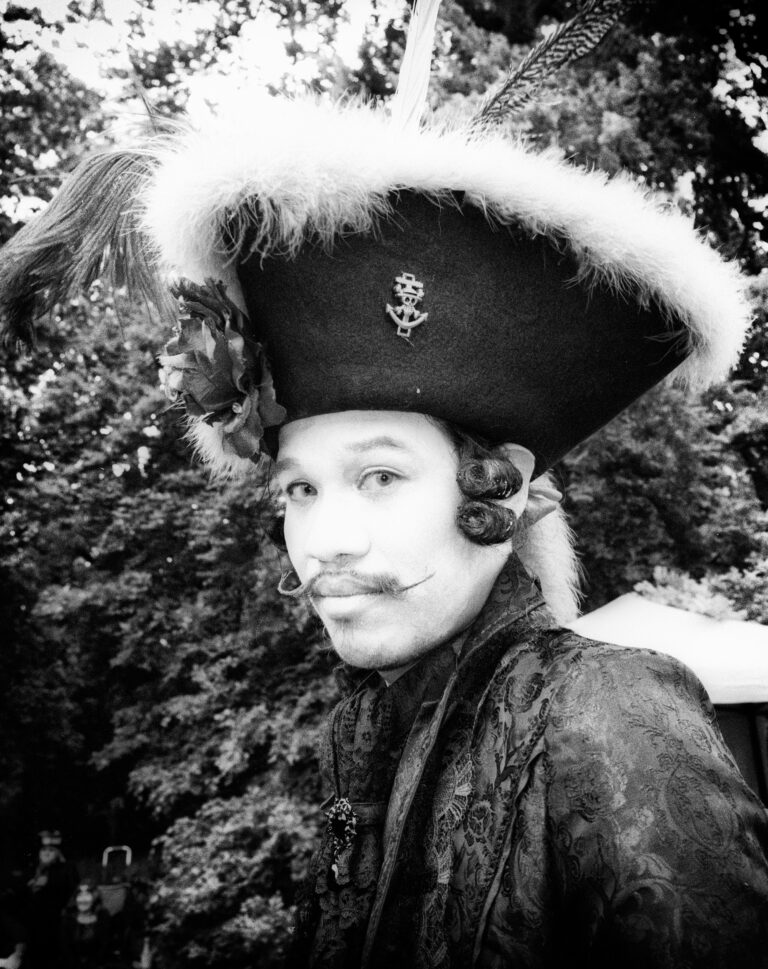
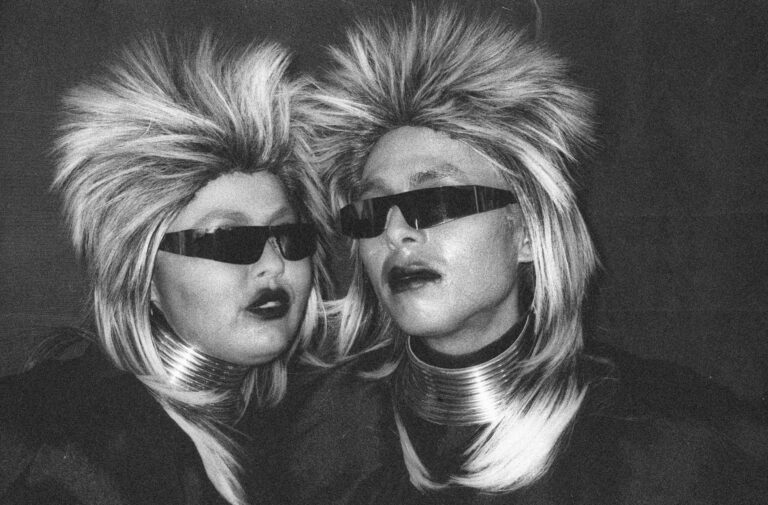
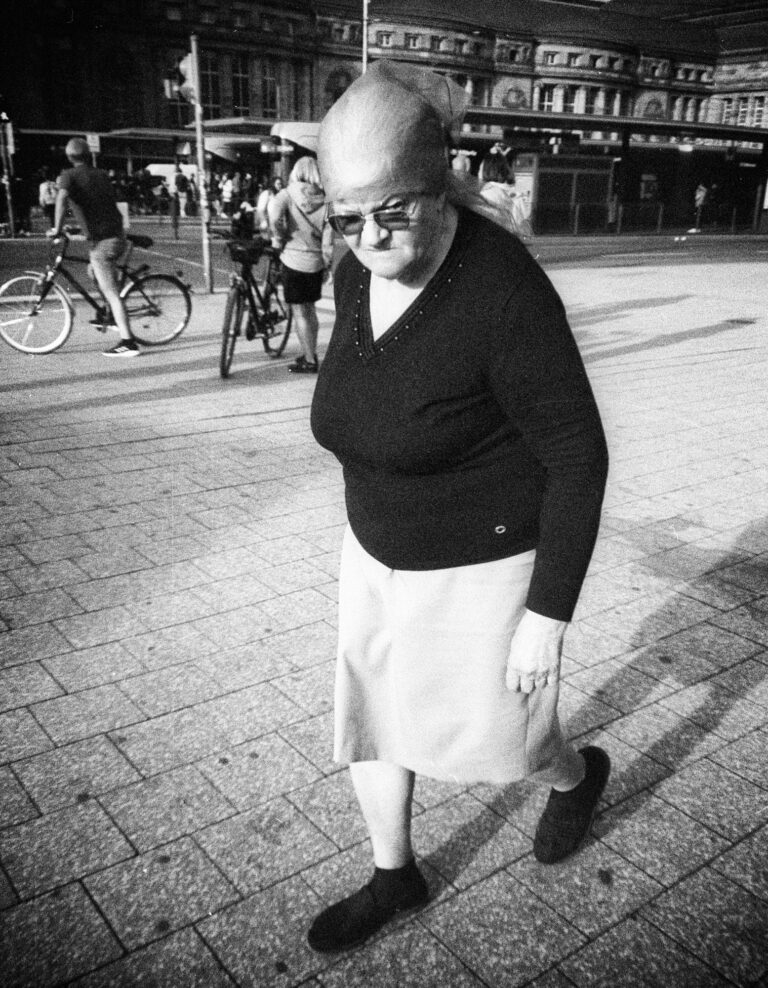
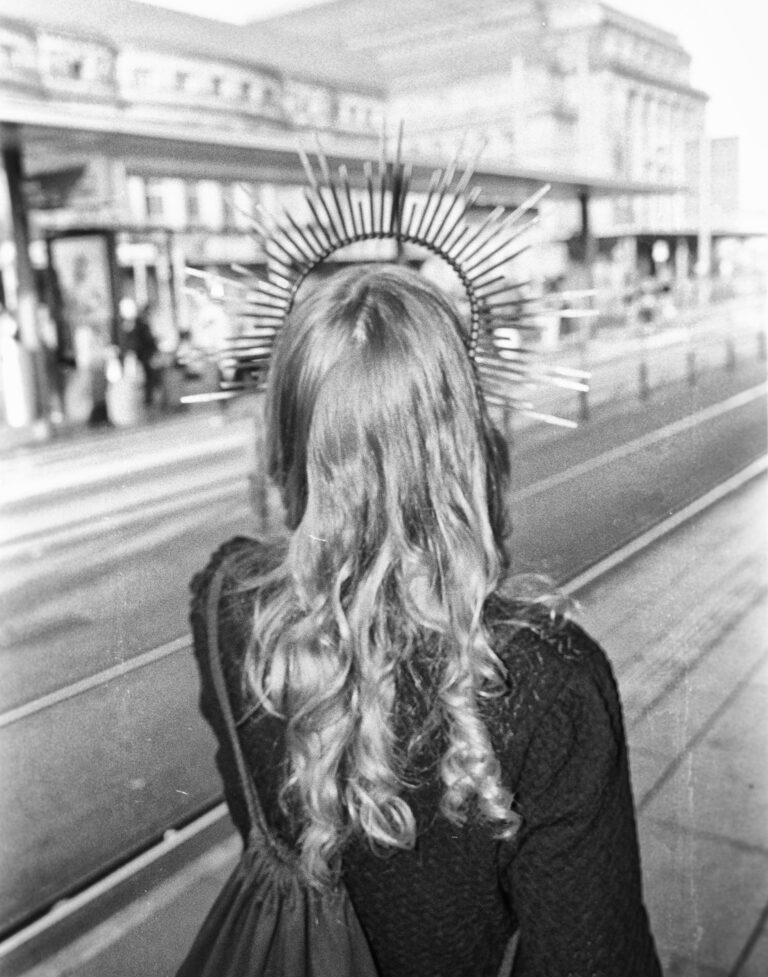
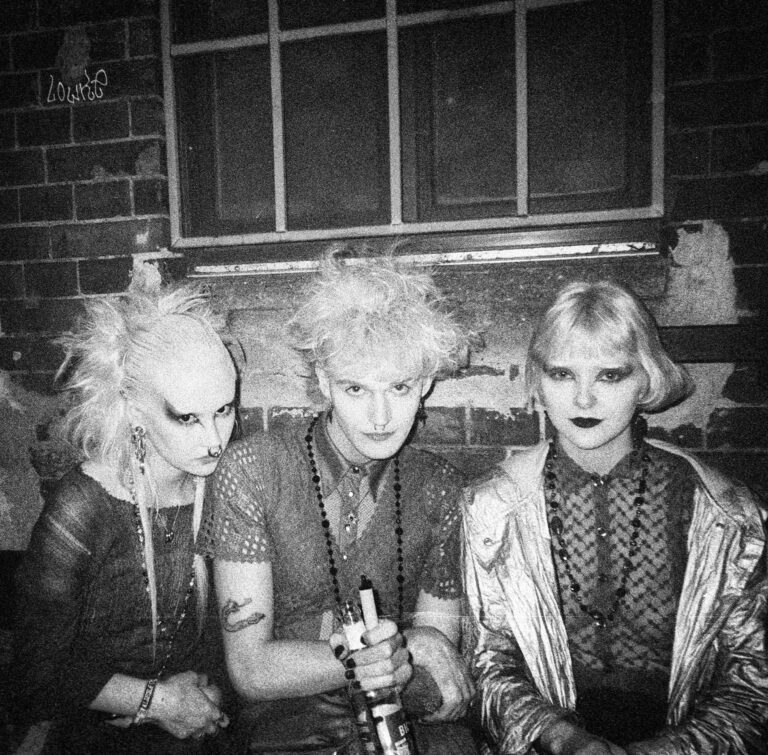
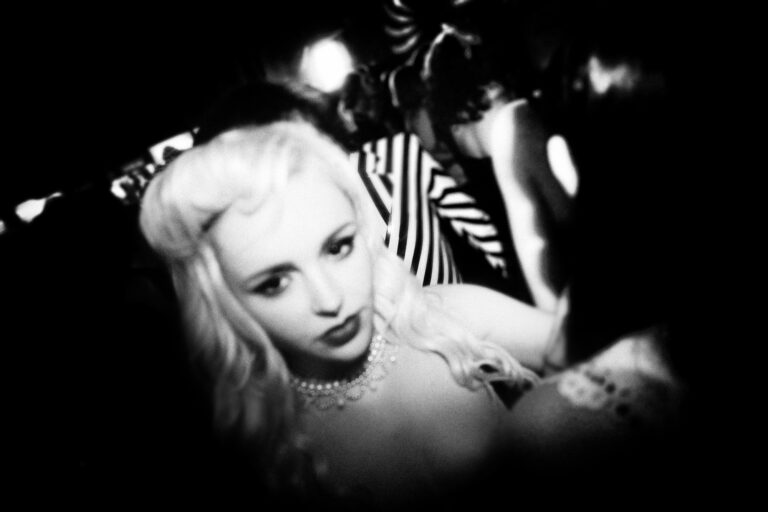
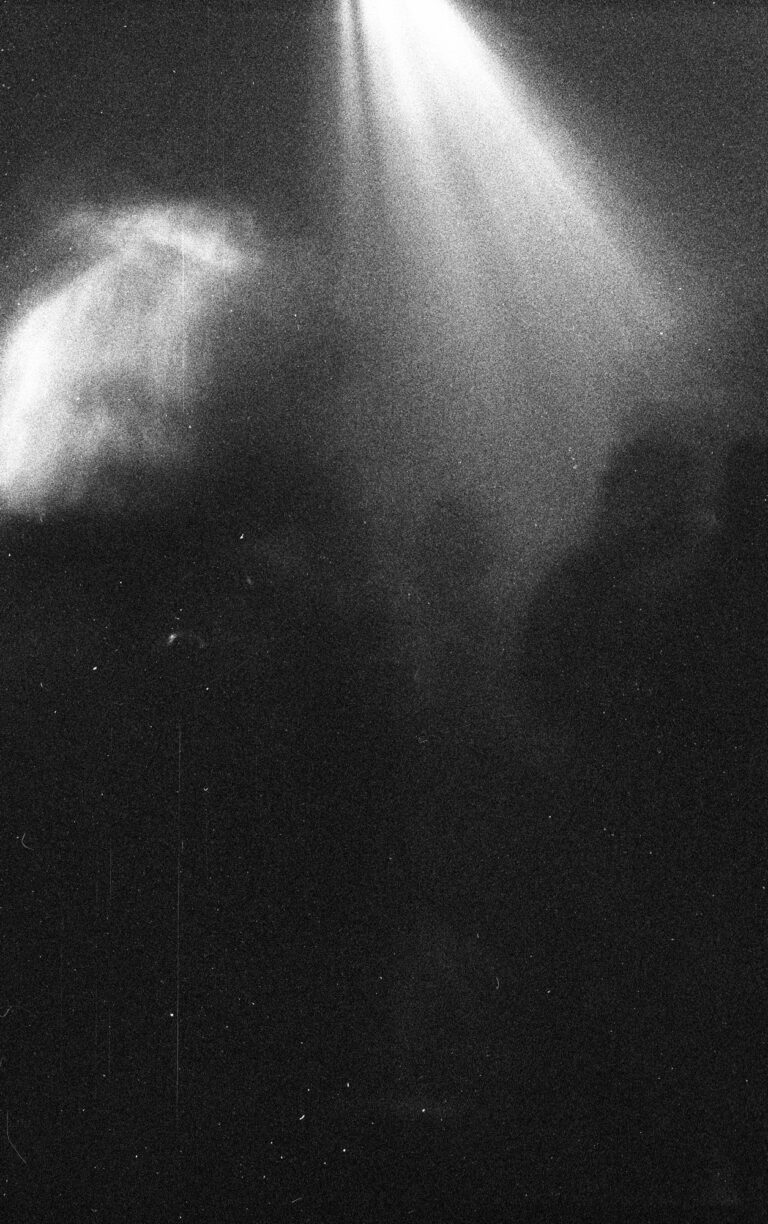
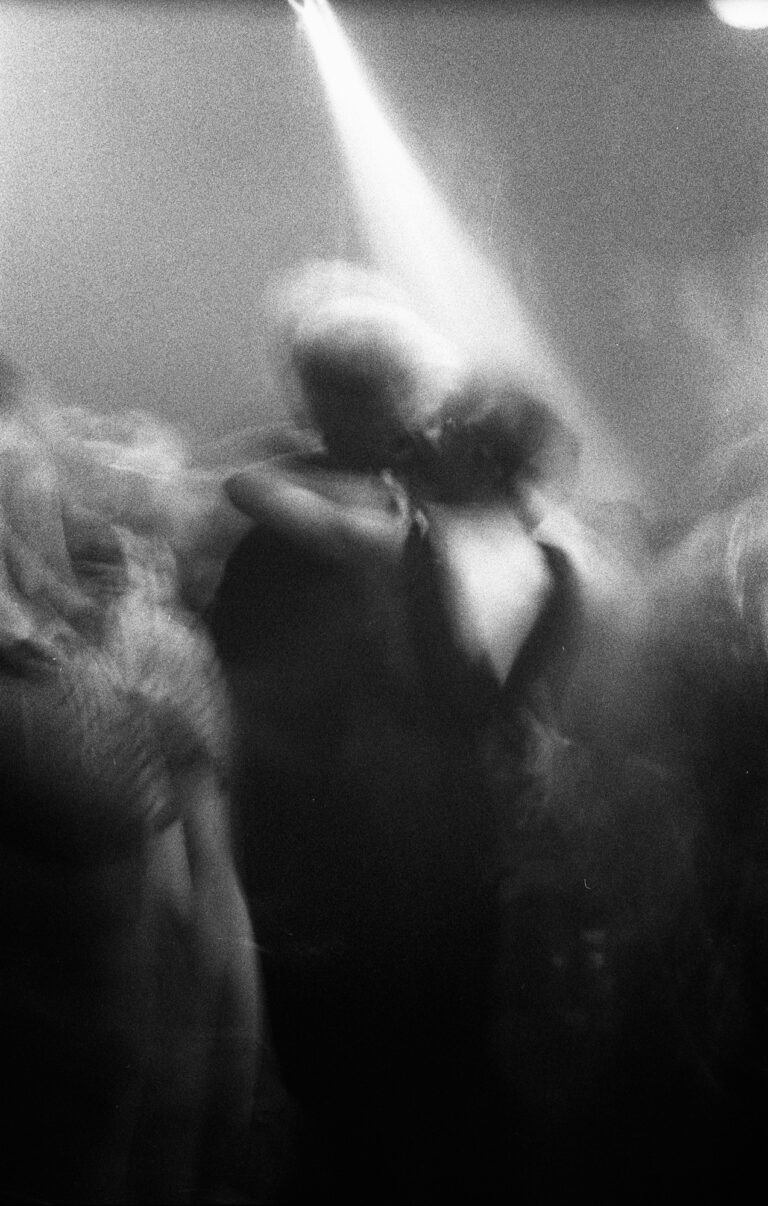
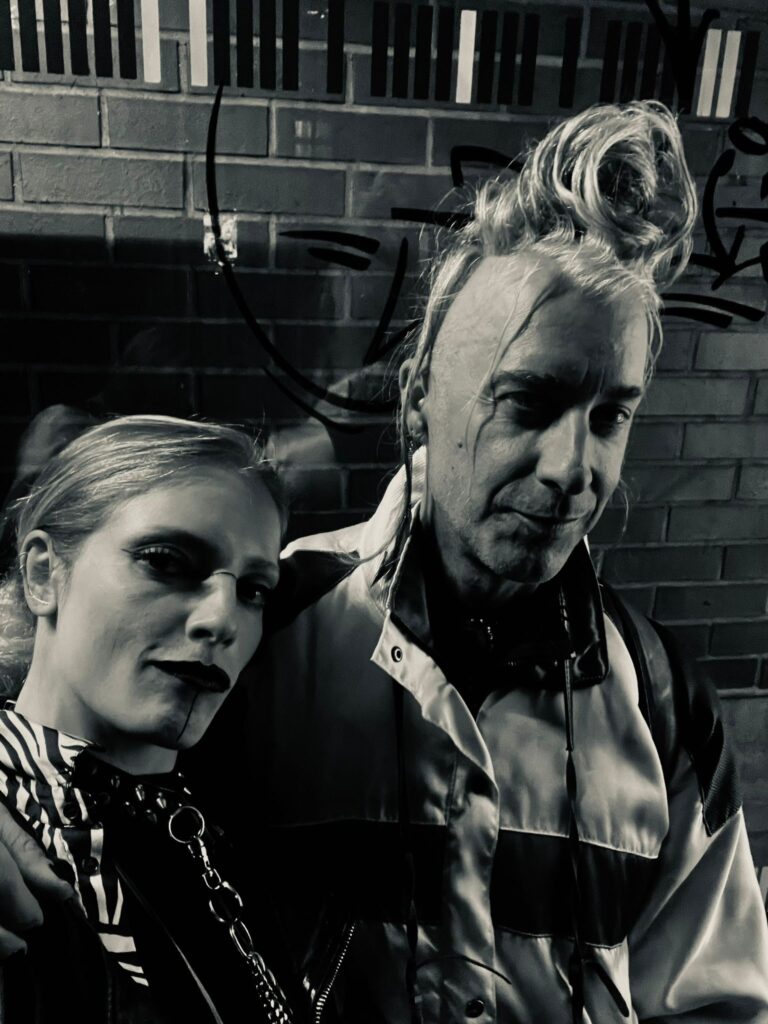
In their project Of Lilies and Remains, photographers Luca Desienna and Laura Estelle Barmwoldt dive into the world of goth and darkwave culture, capturing the ephemeral beauty, raw intimacy, and unusual appeal of the scenes in Leipzig. Through their lenses, they offer a rare, unfiltered glimpse into a subculture that is often misunderstood or reduced to clichés in mainstream representation.
In this interview, we talk about their artistic journey and explore what keeps goth culture alive. Also, how their photographic approaches complement each other, and what Of Lilies and Remains reveals about a universe that refuses to fade into the past, inviting us to see the goth scene as a deeply felt way of life.
Linda Zhengová:
Of Lilies and Remains captures a world often viewed as enigmatic and impenetrable. What drew you both to the goth and darkwave scenes in Leipzig, and what was the initial spark for this project?
Luca Desienna:
I’ve been part of this scene pretty much since I was a teenager, but back then, it felt kind of normal. Growing up at a very alternative art college in Northern Italy, it was common to see all sorts of haircuts—mohicans, rockabilly bananas, dreadlocks, shaved skulls, tattooed skulls, spikes, and so on. Being a goth was just part of the fabric of that environment.
We’re talking about the late ’80s and early ’90s—a time when subcultures like punks, mods, rockers, goths, new romantics, and ravers were still very much alive. Over the years, many of these scenes have faded or disappeared entirely in parts of Europe.
The goth scene, however, has managed to survive in its own way. So, when I first landed in Leipzig for the WGT, it was a beautiful surprise. I was immediately drawn to document it. I think I even managed to get a press pass for the very first festival I attended there.
Laura Estelle Barmwoldt:
I’ve also been part of the goth scene since my youth, and was later drawn toward the Berlin techno scene, but I’ll always have a deep appreciation for the music and the monochrome yet boundless self-expression this subculture offers.
What I love about the scene, and what makes me feel at home in it, is that although the presentation can be extreme, shocking, or eccentric, people are incredibly kind and empathetic with one another.
What sparked my interest in photographing WGT specifically was witnessing this juxtaposing, celebratory tradition—a distinct and expressive subculture merging with Leipzig’s everyday life. It creates such unique, touching, and photogenic moments, all set against the backdrop of the city’s bustling streets and old architecture… It’s sublime. The scene, typically underground and niche, gleams across the city like a black rainbow—curiously examined, yet warmly embraced by the locals.
As Luca had already started this project before we met, I was happy to join forces with him—and I’m very glad I did.
Linda Zhengová:
Over seven years, this project must have evolved significantly. How did your approach to documenting the scene shift throughout that time?
Luca Desienna:
I’m not sure it has shifted, honestly. I’ve been using the same cameras, the same film, and keeping the same attitude all these years. You probably wouldn’t be able to tell which shots were from last year and which were from the early ones.
My approach has always been driven by curiosity and fun. I was (and still am) enjoying myself immensely when shooting, and that’s always been the first rule for this series. No overthinking, no rigid plans, no specific aims—just capturing whatever feels right in the moment.
Laura Estelle Barmwoldt:
Since I joined the project in 2022, I’ve admired Luca’s style, especially the way he creates intimate portraits that capture people and their emotions in a single moment. My aim is always to glimpse the essence of a person—maybe even the quiet parts, the shyness or self-doubt—while they’re in the middle of feeling free and confident. That duality fascinates me: the version of ourselves we want others to see, and the part we try to hide. When both appear, it’s something truly beautiful.
Over time, my approach has become more personal, more relaxed. I’ve found that the more honest and direct my curiosity is, the more open and unguarded the responses become.
Linda Zhengová:
This project was a collaboration between the two of you—how did you divide roles, and in what ways did your perspectives complement each other?
Luca Desienna:
This all happened because we started attending the same festivals together. Laura became a part of my adventure, and her presence has truly enriched it—and my experience as a whole. We both began shooting together, and for me, the beauty lies in witnessing her shooting. The persona she takes on when holding the camera is absolutely fascinating—so sexy, so powerful, and so dynamic. It was a wonderful revelation to see my partner in that role, bringing a whole new energy to the process.
Laura Estelle Barmwoldt:
I feel the division of work comes quite naturally to us. Luca has an amazing and quick eye, and I love to stray around, observe, and explore. We definitely notice the same things at times, but generally, I let intuition guide me and we each do our thing. When we cross paths, we plan and team up.
As a mixed-gender team, I do think it gives us space for different approaches—some people might need more encouragement, while others are more enthusiastic from the start.
Our communication is straightforward, but we have a lovely way of aligning—forming a concept, seeing similarly, acting differently, and letting our imaginations cooperate while photographing. It’s almost like a dance without choreography, without the need for too many words.
[…] I once heard of a mother who taught her daughter: ‘If you get lost in public, go to a punk or a goth—they’ll help you.’ I think that sums it up pretty well.
Linda Zhengová:
Goth subculture is often misunderstood or reduced to clichés in mainstream representation. What do you think Of Lilies and Remains reveals that people might not expect?
Laura Estelle Barmwoldt:
That’s true, unfortunately. I hope it gives people a sense of just how creative, attentive, and multifaceted the scene really is.
There’s so much ingenious craftsmanship that goes into some of the outfits, and so much affection—helping each other with makeup, costume pieces, or even just navigating stairs.
The atmosphere at WGT is truly unique, and the demographic is incredibly diverse. You’ll find people in their 70s celebrating the freedom to express themselves however they like, and teenagers just beginning to figure out their place and preferences. There are all kinds of budgets, backgrounds, income levels, gender expressions, sexual orientations, and constellations present.
The feeling of calmness, quirkiness, wildness—and this natural sense of belonging and looking out for one another—is something I haven’t encountered anywhere else.
Luca Desienna:
What Of Lilies and Remains reveals—something people might not expect—is the faith and conviction behind it all. This subgenre has endured over the years because of the deep-rooted belief of the people who are part of it. It’s not just a style or a phase; it’s truly a way of living.
Linda Zhengová:
From Wave-Gotik-Treffen to Gothic Pogo, your work spans different expressions within the scene. How do these spaces differ, and what unites them?
Luca Desienna:
WGT is massive, and it encapsulates the full spectrum of the scene’s diverse flavors: goth-punk, death rock, new romantics, darkwave, minimal, coldwave, ethereal wave, gothic rock, new wave, industrial, post-punk, neoclassical, horror punk—even a touch of psychobilly! It truly has it all.
Gothic Pogo, on the other hand, is more niche and, in many ways, more alternative. It leans toward the underground, promoting highly experimental—sometimes even cacophonic—bands. This gives it a distinct identity, attracting a crowd I’d describe as punk-chic-laboratory: daring, unconventional, and always pushing creative boundaries.
Laura Estelle Barmwoldt:
I’d say Gothic Pogo is the wild child counterpart to WGT. It draws a more punk-inspired crowd, with sky-high mohawks and a “less is more” attitude. The music is geared toward dancing all night and stumbling home when the sun comes up.
WGT is larger and more structured to accommodate different genres and interests. There’s space to showcase elaborate looks, the classic and theatrical sides of goth culture, but also an incredible diversity of styles, trends, music, and artistic expression.
It feels like an annual gathering—a place where people reconnect through shared affinities, while also celebrating how many different interpretations of “goth” exist. Everything merges: music, venues, aesthetics, and attitudes.
There’s a strong sense of unity, but also exchange and inspiration.
Linda Zhengová:
Did you encounter any resistance or skepticism from the community when documenting these intimate moments? If so, how did you build trust?
Luca Desienna:
From day one, we never encountered resistance or skepticism—perhaps because people recognized that we are part of the scene. We’re not outsiders looking in, trying to capture their world from a distance. Instead, we’re part of the circus itself—moving within it, living it. That sense of belonging naturally builds trust and a feeling of safety, which allows for an intimate, authentic perspective.
Laura Estelle Barmwoldt:
I feel that some people really flourish when you notice them—the work they’ve put into the details, or when you simply compliment their vibe. Others are curious about the project and happy to support something artistic. Since we’re part of the scene and dress accordingly, there’s a sense of bonding—a connection—rather than the feeling of being a novelty to be photographed.
[…] This subgenre has endured over the years because of the deep-rooted belief of the people who are part of it. It’s not just a style or a phase; it’s truly a way of living.
Linda Zhengová:
Your work doesn’t just document a subculture; it captures emotions—solitude, intensity, defiance, celebration. What emotions do you hope the viewer feels when looking at these images?
Luca Desienna:
Personally, I want the viewer to feel the privilege of gaining insight into a truly exclusive lifestyle and movement. This book is like a VIP seat—an intimate, behind-the-scenes experience that offers a rare glimpse into a unique world. It’s not just a visual treat, but also an open invitation to delve deeper, to explore, and to uncover more.
Laura Estelle Barmwoldt:
Ideally, all of those. The book presents a multitude of different attitudes—and just as varied may be the reactions and interpretations of its viewers. There’s melancholy, a sense of innocence lost or misfortune endured, and there’s lust for life, exhibitionistic joy, and self-actualization. The curve between those extremes is what we strive to show—and inspire.
Linda Zhengová:
Did working on this project change your own perception of goth culture, or even of identity and self-expression more broadly?
Luca Desienna:
Yes, I believe it revealed a deep sense of respect and tenderness—something I may not have fully noticed before.
There’s a certain beauty in those unexpected moments of kindness. Like when you’re on a tram and see a heavily pierced guy, head covered in tattoos, a kilo of studs on his clothes, gently helping an elderly person off the carriage. Those moments stay with you. They peel back another layer, offering a perspective you might not have seen before. They remind you that people are always more than their appearances.
Laura Estelle Barmwoldt:
It reinforced my belief that this subculture is embracing and caring. The creativity of individuals, as well as the nuances between sub-scenes—goth punk, medieval goth, BDSM, horrorbilly, dark wave, and more—and their continuous evolution, never ceases to amaze and inspire me.
My takeaway is that all my different tendencies, preferences, and experiences form the mosaic that is my life. Every part adds to the understanding and empathy I bring to the world around me—and supports my growth.
The overall inclusive and engaging atmosphere of WGT—where you can never be too freaky or weird or expressive—reminds me that we are all unique and interesting, and that we should meet one another with optimistic kindness in our daily lives.
I once heard of a mother who taught her daughter: “If you get lost in public, go to a punk or a goth—they’ll help you.” I think that sums it up pretty well.
[…] This subgenre has endured over the years because of the deep-rooted belief of the people who are part of it. It’s not just a style or a phase; it’s truly a way of living.
Linda Zhengová:
With Of Lilies and Remains set for release in late 2025, how do you envision its impact? Who do you hope will engage with it?
Luca Desienna
I hope it evolves into an honest, engaging, and respectful document of this scene—one that stands the test of time and stays relevant for years to come. My aim is to create a special publication that not only celebrates this subgenre, which has thrived since the early 1980s, but also pays tribute to its evolution and enduring presence.
I envision a book that readers return to time and again—each time uncovering new details, hidden layers, and fresh perspectives. A work that keeps revealing more of itself, like a living archive of this vibrant culture.
Laura Estelle Barmwoldt:
It’s an ode to the goth scene and the people of Leipzig—but also to the photographic community. The book explores what it means to be human, and how many different designs of “identity” exist. I think everyone can relate to that.
It’s not meant to speak only to a niche audience, but to anyone who appreciates authentic self-expression, and the bold, fascinating ways people live their truths. It’s about the unifying power of photography—a reminder and a connector, an ode and an appeal to the love of humanity, creativity, and the decadent weirdness we all carry within us, in one way or another.