“It is impossible to feel emotion as past. One cannot be a spectator of one’s own feelings; one feels them, or one does not feel them; one cannot imagine them without stripping them of their affective essence.”
—Édouard Claparède, La question de la mémoire affective
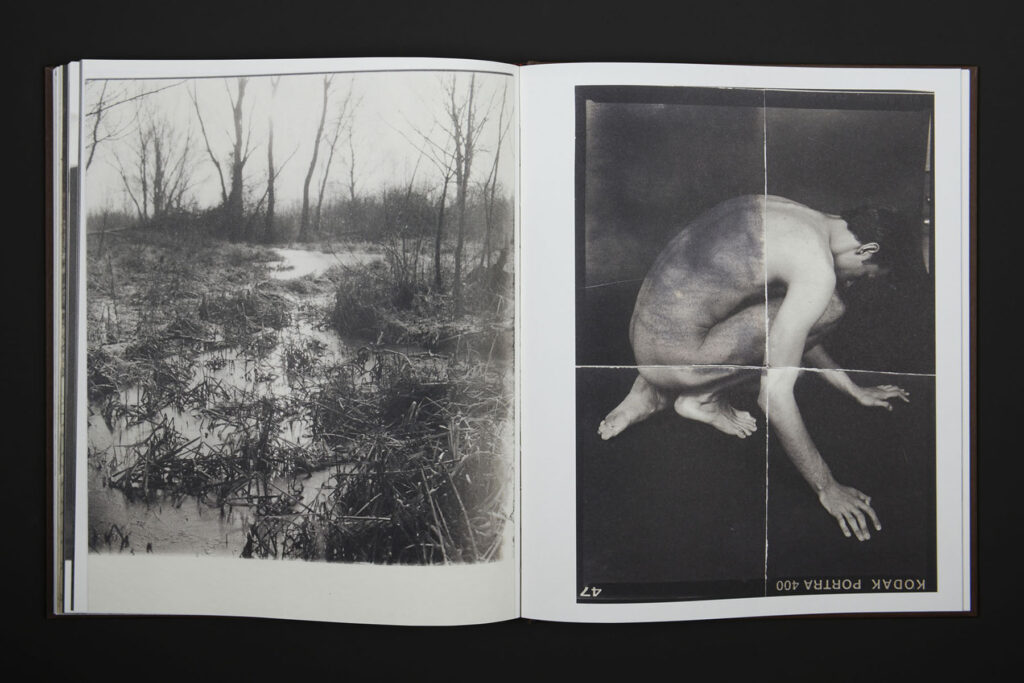
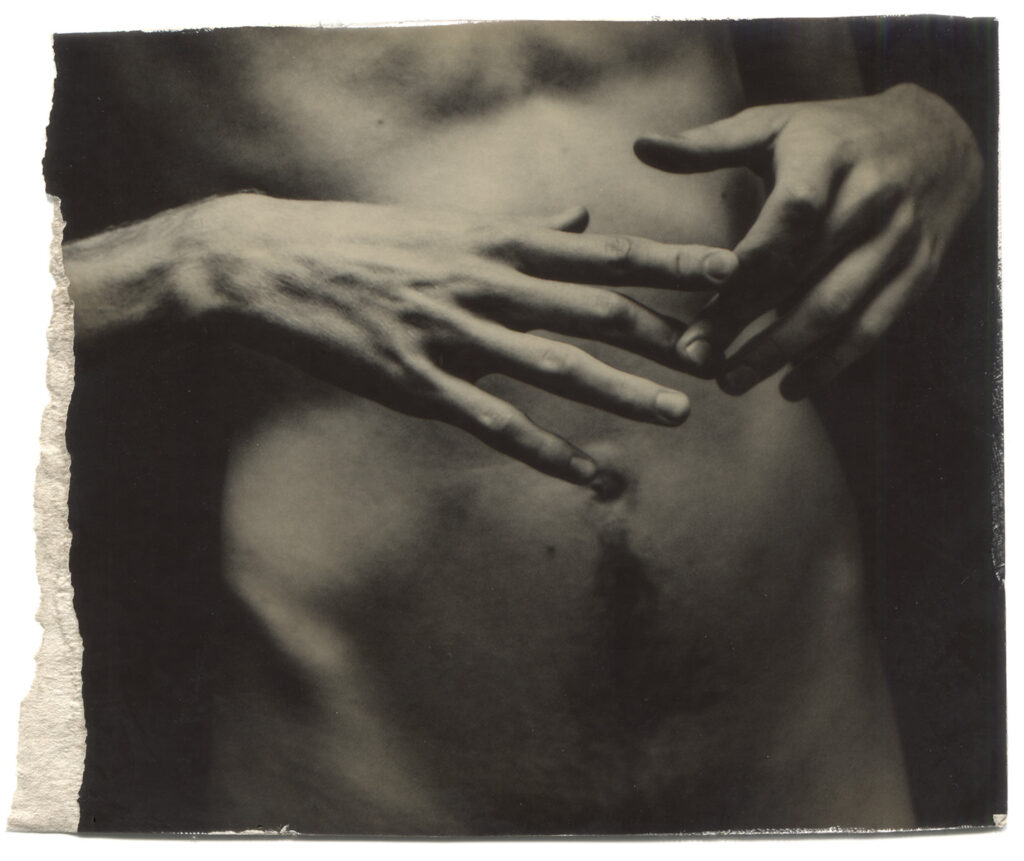
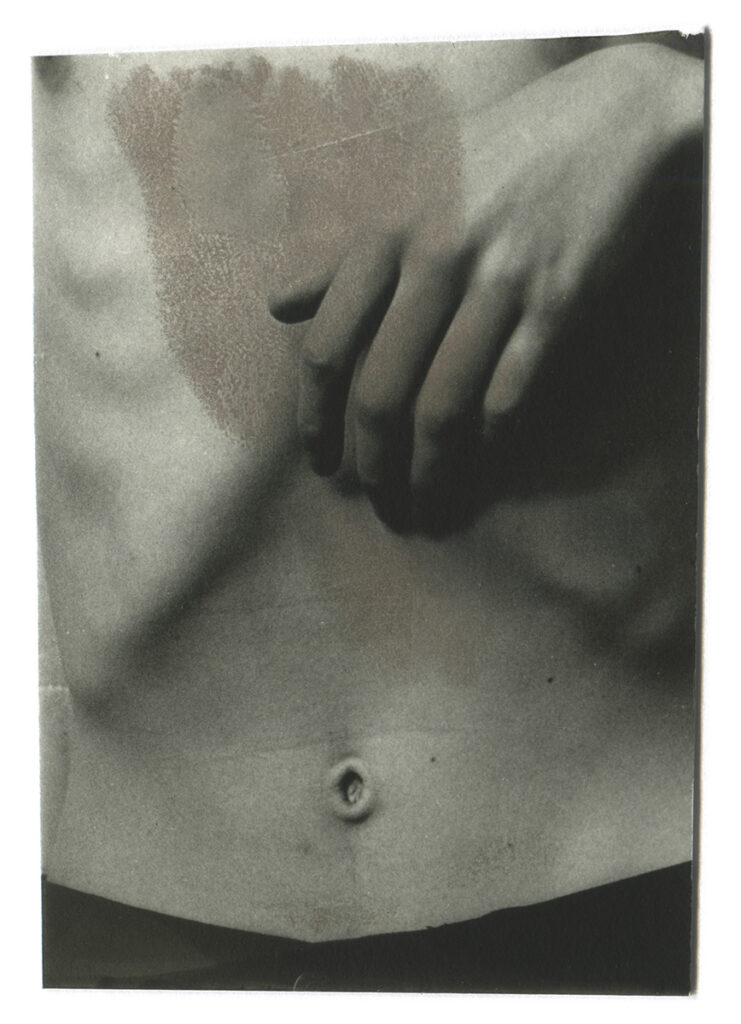
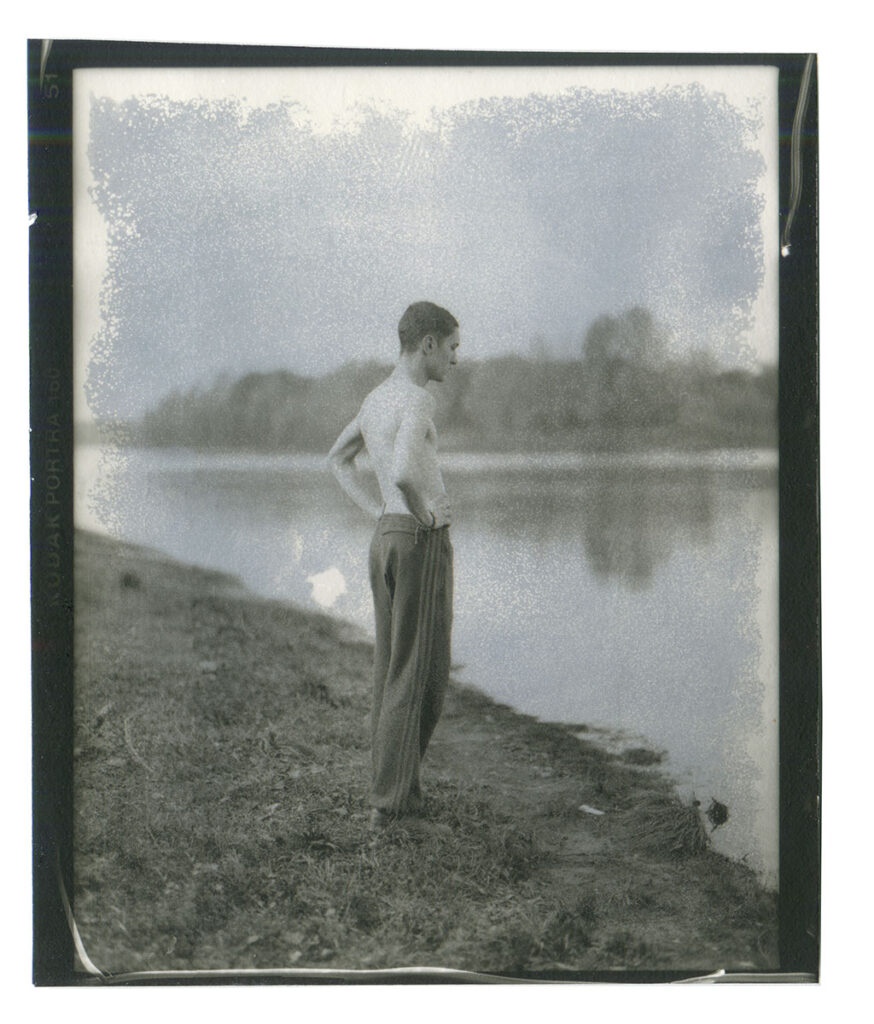
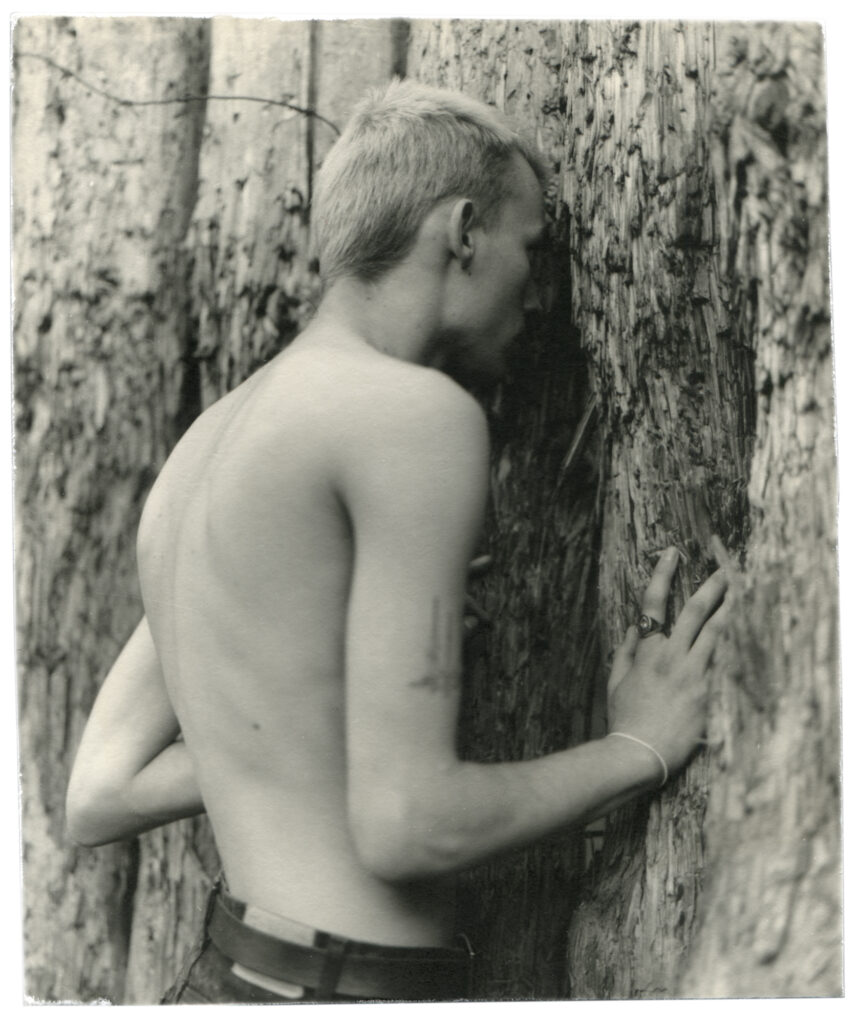
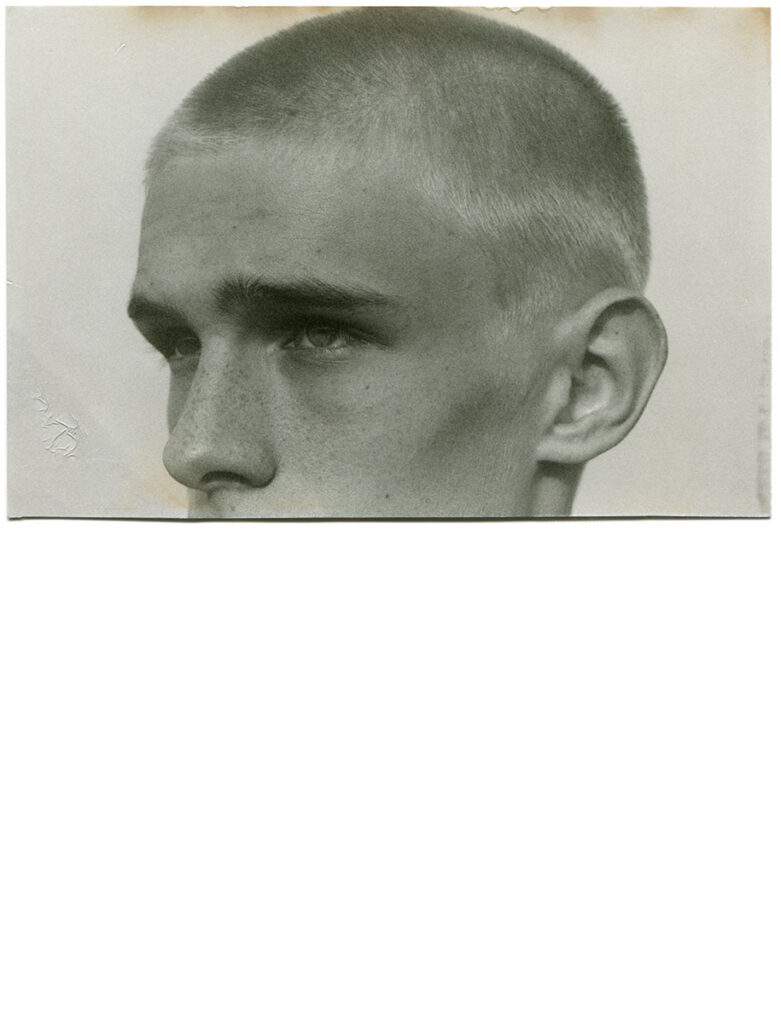
Showcasing war as a form of a metaphor, a visual experience rather than a direct representation of reality is something we can find in Vic Bakin’s (b. 1984, Ukraine) Epitome. Newly created imagery in war-torn areas is merged with his archive documenting male adolescents in transitory and fragile states. Bakin began the project before the Russian invasion of Ukraine, photographing young men who are often queer, often on the fringes of society, grappling with masculinity and coming of age. These early portraits hold a tentative softness, a quiet vulnerability. Yet, with the conflict’s outbreak, this body of work metamorphized into a fragile attempt to make meaning—or at least find beauty and strength—in the collapse.
In 2020, Bakin stopped relying on professional labs to process his images and turned his tiny bathroom into a DIY darkroom. It became a dimly lit sanctuary where he could fully immerse himself in the tactile process of printing. Under the red glow of the safe light, the sounds of distant explosions outside were muted, and the act of developing photographs became an escapist meditative practice. This small, womb-like space provided a sense of safety and focus, where the outside world seemed to dissolve, leaving only the rhythmic motions of agitation and exposure. The resulting photographs, with their muted sepias and milky hues, exude a sense of warmth and nostalgia, as though they carry the faint traces of memory’s earliest impressions.
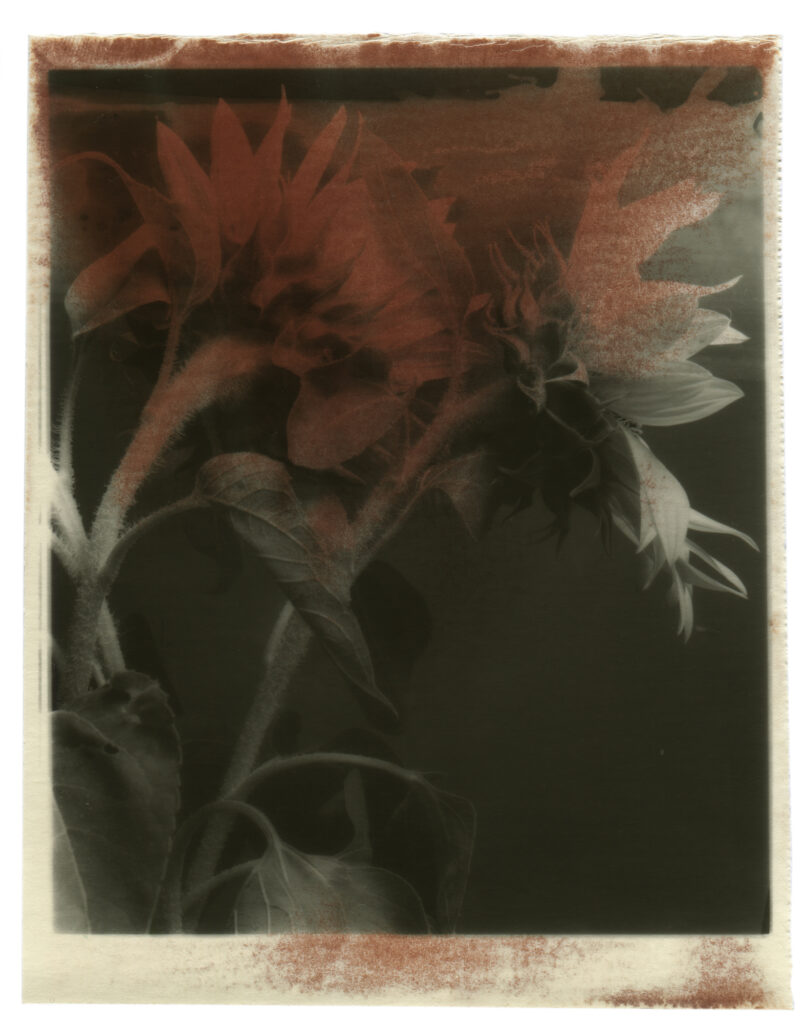
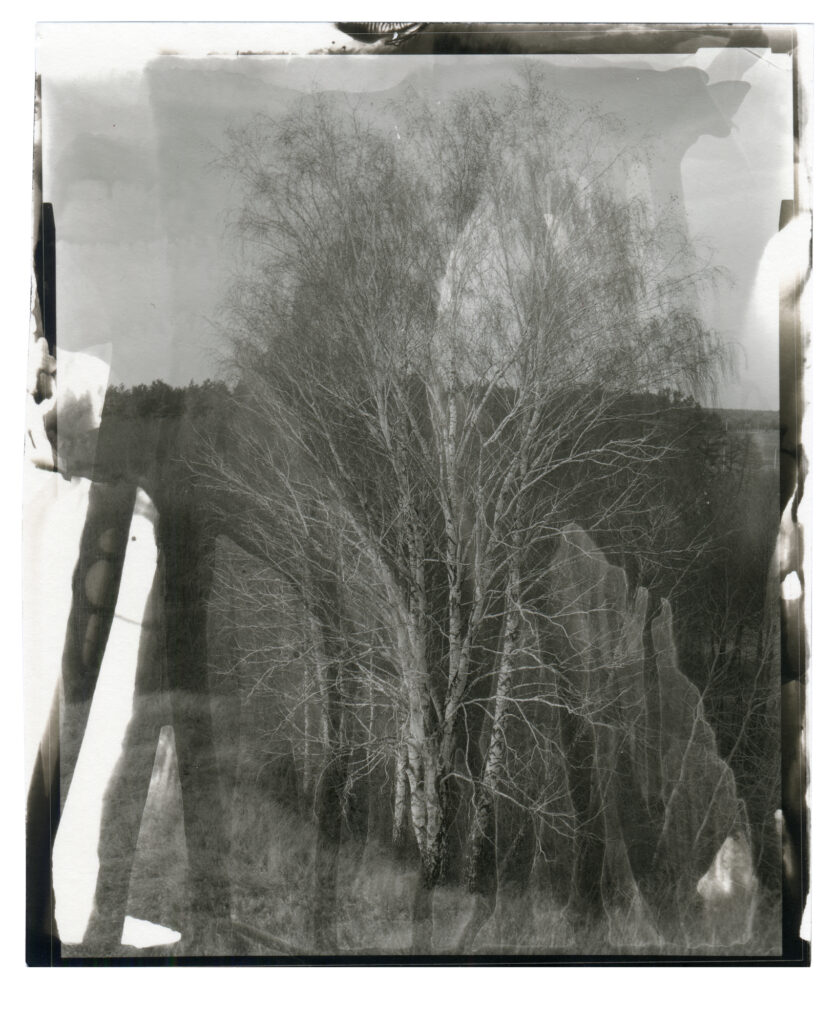
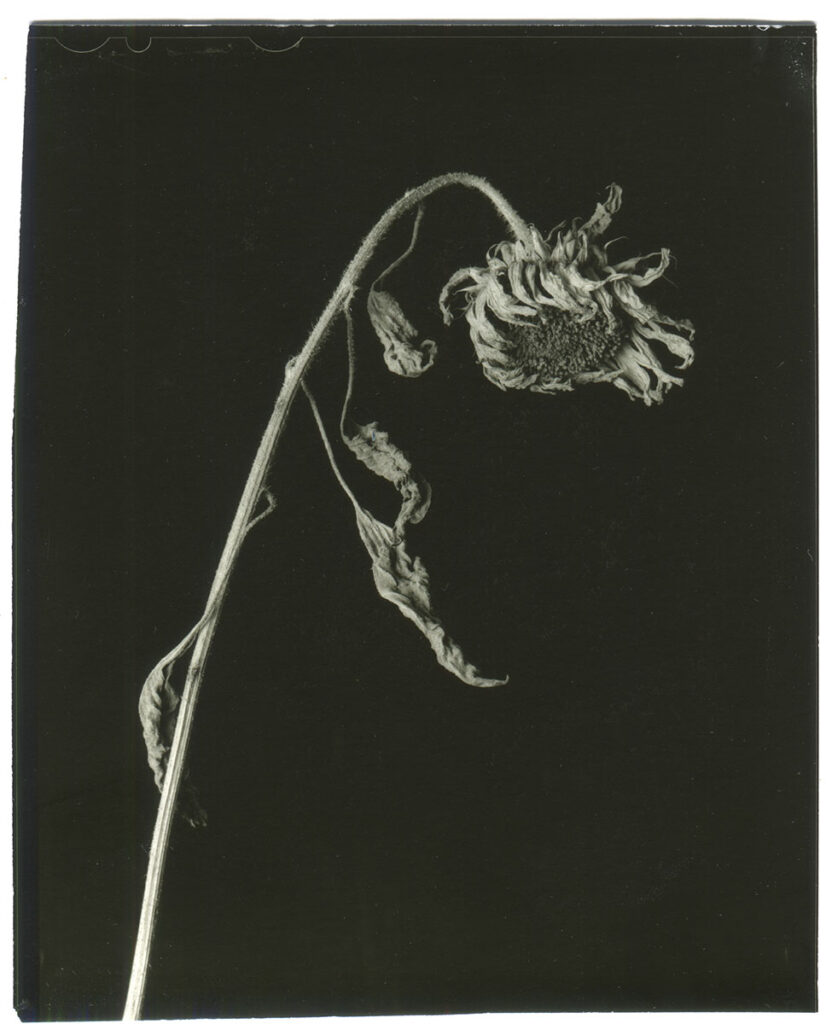
Epitome seems to exist in a time capsule of its own. The palm-sized prints, rough-edged and scarred by chemical stains, feel like relics from an excavation. The red stains on the photographs, byproducts of reused fixer chemicals, resemble wounds. They speak to ruptured lives, bloodied land, and histories torn apart. These images are bruised, much like war, memory, and the human body itself. And yet, in this destruction, there’s tenderness. The same soil that drinks blood can grow sunflowers. Bakin’s work holds these contradictions of despair and resilience, decay and renewal.
“(…) in this destruction, there’s tenderness. The same soil that drinks blood can grow sunflowers. Bakin’s work holds these contradictions of despair and resilience, decay and renewal.“
Bakin’s portraits resist the phallicized, dominant tropes often associated with male imagery. These men aren’t performing strength; they are caught in the unfiltered act of being. Their fear is visible, yet they exist with a radical honesty. There’s a delicate tension in their expressions, a flicker of exhaustion and hope. In these faces, there is also the haunting presence of memento mori, a reminder of our mortality. As Roland Barthes suggests in Camera Lucida, every photograph carries an implicit that-has-been, a spectral trace of the inevitable passage of time and the certainty of death. Susan Sontag echoes this in On Photography, noting how photographs both preserve and mourn the fleetingness of life. Some of these men are now soldiers; others may be gone entirely. Having us imagine and project, Bakin’s work stretches traditional narratives of power and identity and also creates space for empathetic engagement, putting a mirror infront of us too.
“(…) Some of these men are now soldiers; others may be gone entirely. Having us imagine and project, Bakin’s work stretches traditional narratives of power and identity and also creates space for empathetic engagement, putting a mirror infront of us too. “
The word epitome slips easily into the realm of cliché—embodiment, essence, representation—but in Bakin’s hands, it is something more urgent. His Epitome is an essence of experience, a distillation of something fleeting and unresolved. In The Civil Contract of Photography, Ariella Azoulay writes that “Photography’s claim to visibility is not a reflection of reality but a proposal to redefine it.” Bakin’s images do precisely that—they don’t show us the “truth” of manhood or war but rather the spaces in between, the quiet moments where reality falters and something more ambiguous takes its place.
This is trauma imagery in Jill Bennett’s terms, where the focus shifts away from conventional representation to the affective state that trauma evokes. “Trauma itself is classically defined as beyond the scope of language and representation,” Bennett writes in Empathic Vision. Such portrayals of suspended emotional states of living through trauma invite what Bennett calls “critical and self-reflexive empathy,” asking viewers to engage with the weight of memory and experience rather than its visual markers alone.
“Bakin’s images show us the spaces in between, the quiet moments where reality falters and something more ambiguous takes its place.”
Bakin’s images embed shock within a deeper, more expansive conception of memory—one that stretches beyond a single moment or place and flows through lived experience. Trauma, in his work, has presence, a force that moves through bodies and spaces. “Affect is revealed to flow through bodies and spaces, rather than residing within a single subject,” Bennett observes, and this is what makes Epitome so compelling. It draws us into a collective space of empathy, where the images refuse to be pinned down, instead insisting on being felt, absorbed, and carried, asking us to linger in their ambiguity.
The book is filled with recurring motifs of wilting sunflowers, birds caught mid-flight, skeletal trees. The landscapes—bullet-pocked walls and scarred fields—exist in a liminal state, caught somewhere between ruin and regeneration. Towards the end, the images shift. Coated paper replaces matte textures. It’s an induced rupture, a flashback, an erasure. The final image is a young man seated, shadowed by a ghostly presence that leaves us with no answers. The book fades out with Bakin’s poetic epilogue where he writes: “No one can steal the memory of the place. Though the place is beyond recognizable”.
“Epitome doesn’t attempt to define trauma or transform it into a spectacle. It doesn’t scream its truths; it whispers them.”
Epitome doesn’t attempt to define trauma or transform it into a spectacle. It doesn’t scream its truths; it whispers them. It invites us to sit with the discomfort, to feel its weight, to understand the impossibility of fully comprehending. It is a meditation on endurance, a lament, and a fragile act of hope. It is, as Bakin describes, the epitome of a moment already lost.
is a self-educated Ukrainian photographer based in Kyiv. His work focuses on documenting Ukraine’s youth and recently, his focus has also shifted to the themes of war in Ukraine. His series Epitome was selected as ‘The Ones to Watch’ by the British Journal of Photography and the winner of the LensCulture photography awards.
VOID
is an art-house publisher established in 2016 by Myrto Steirou and João Linneu. Void is home to books that would not find a place elsewhere. Never compromising, their projects mix unique narratives with innovative design and fine experimental materials.