David Salcedo born into a lineage of hardworking laborers and emigrants, the subject chose to pursue the “path of light” rather than follow the family’s traditional path in the service industry. Although formally trained in technique and encouraged to enter the fashion world, they preferred the intuition-led experience of working outdoors under natural light. Their career was forged through years of struggle and uncertainty, eventually leading to professional acclaim through awards, exhibitions, and books. Despite the challenges, they remain a resilient artist who relies on heart and intuition to find beauty and meaning in the seemingly invisible.
Santolo Felaco
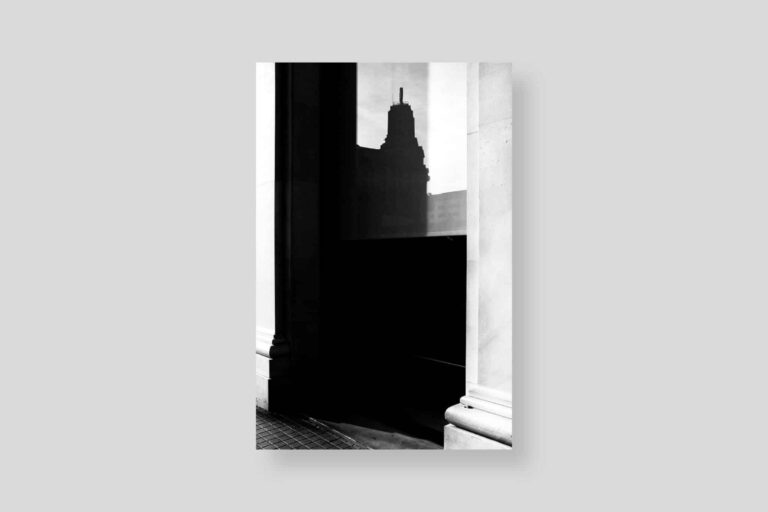
Your work was created entirely in Plaza Cataluna. I remember a work by Xobanova, Un Universo Pequeño, which was created on a ten-meter stretch of road. Were you inspired by him or other artists? What difficulties did you encounter when you decided to develop your work in a confined space?
David Salcedo
I greatly admire Antonio Xoubanova, and I believe his work, Casa de Campo, is one of the best-edited books ever, but the idea for this project predates my discovery of Un universo pequeño (A Small Universe). In fact, in my case, it stems from learning to extract the maximum potential from spaces that, on the surface, seem uninteresting or repetitive, since I’ve always lived in small towns, and I considered learning this essential for my creative process. Obviously, we are all products of our influences. In my case, I draw inspiration from Bernard Plossu, Ricardo Cases, Ralph Gibson, Cristobal Hara, and David Jiménez; that’s in terms of the approach or the spirit with which I take the photograph. As for editing and narrative, which is where I believe authors are defined, I’ve learned a great deal by deconstructing Federico Clavarino’s Italia o Italia and The Castle, Robert Frank’s The Lines of My Hand, and, of course, the books by Cristobal Hara and David Jiménez; from the literary work of Georges Perec and Paul Auster; And, above all, from the cinematic editing techniques of directors like David Lynch, Alfred Hitchcock, Godard, and so many others. I’m not aware of having encountered any major difficulties different from what I might encounter in any other job.
Santolo Felaco
The book has a very geometric and rhythmic structure. In particular, the photo on the right is repeated on the next page on the left-hand side. What is the reason for this choice?
Davi Salcedo
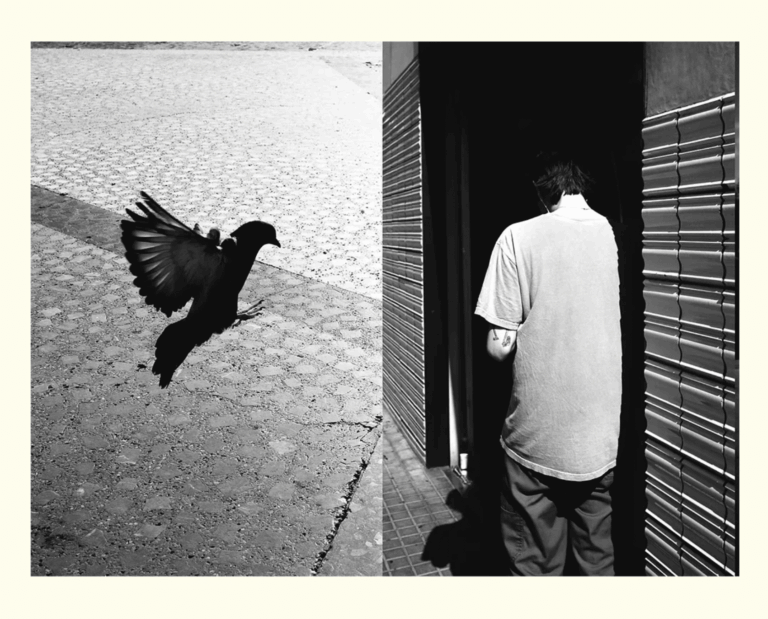
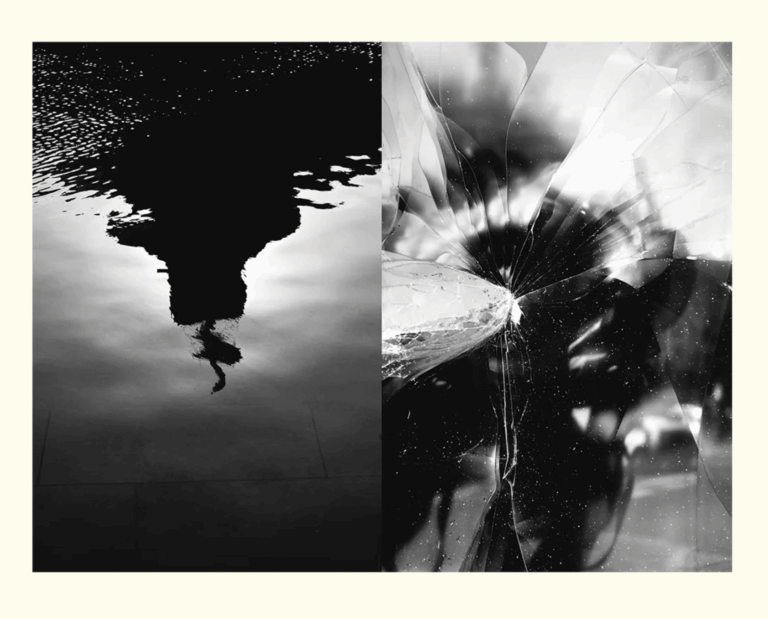
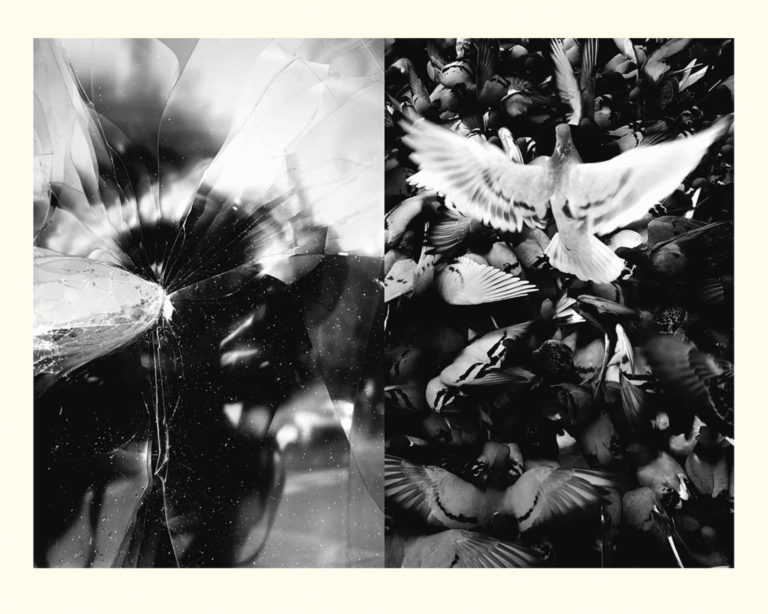
Almost all my projects are long-term endeavors, as I need to understand and discover what the work is really about and be an element that helps bring it to fruition. The idea of immediately repeating all the images on the back of the same page stems from trying to imitate the peripheral vision our eyes have while walking. This allowed me to convey the sense of movement the reader experiences while reading the book. I believe this is vital for the book, as Plaza Cataluña in Barcelona is a constantly moving space where people barely stop to experience it and pass through quickly. Conveying this to the reader seemed essential to me.
Santolo Felaco:
Pigeons feature prominently in many of the photographs and are a recurring theme throughout the book. Can you describe this choice for me
David Salcedo:
The true inhabitants, and owners, of Plaza Cataluña are the pigeons. They are always there, and their presence in the place is massive. It seemed natural to me to give them as much prominence as they have in real life. However, personally, my family has raised free-range pigeons for as long as my father can remember, and they are birds I’m very fond of. Mind you, they take on the character of guardians of the space in the book, and they certainly don’t have the idyllic image I might give them based on my own experience with them.
Santolo Felaco:
What are your next projects?
David Salcedo:
I’m finishing a project called “La Mala Hora” (The Bad Hour), which you can partially see on my website. The work explores the metaphysics that can be created with light during midday, a time we’ve always been told isn’t beautiful. I’ve also been working for years on a series about bars in Spain, which are a crucial element of social and economic cohesion in small towns and neighborhoods far from the city center. One piece from this series was shown last year in the “Bar Bar” exhibition at the PhotoEspaña festival.
And a thousand other things. I’ve long since integrated photography into my life, and I make all my life decisions around it and the possibilities it offers. This means that if you saw my computer, you’d probably find folders and folders of unfinished projects and a good number of photographs waiting to be edited. One of the important parts of my work is editing and organizing the archive; I dedicate a day a week to it, and I believe it’s fundamental to understanding who we are and how we approach the different projects we might encounter.